
Centrifugal Pump Losing Prime? Why It Only Pumps Air
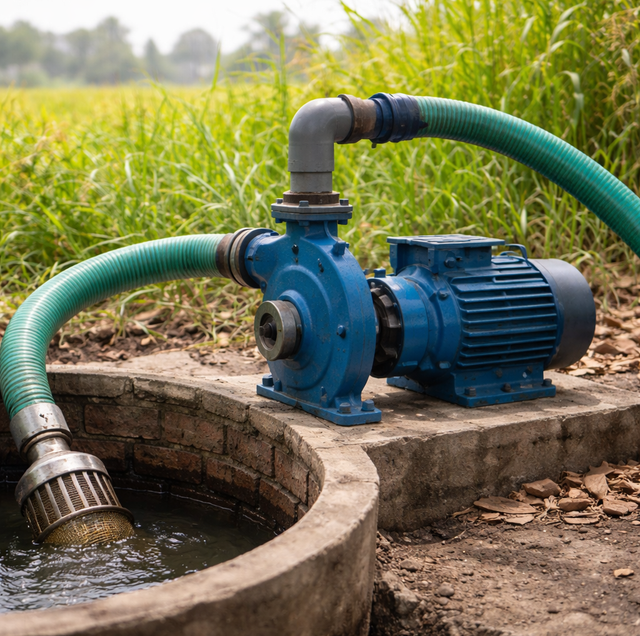
The pump kicks on at the first tap of the morning, the motor winds up to full speed, and the faucet coughs, spits a little cloudy water, then hisses nothing but air. By afternoon it sometimes catches on its own. Or you walk out to the pump, crack the fill plug, top it off, and it runs fine again until it sits overnight and the whole thing repeats. A jet pump that ran all last year without a second thought has turned into a daily ritual.
That pattern, a centrifugal or jet pump spinning hard but moving only air, is a loss-of-prime problem. It comes down to how a jet pump has to be set up before it can lift anything, and once that piece is clear, the handful of things that break become easy to tell apart.
How a Jet Pump Actually Moves Water
An above-ground pump serving a shallow well is almost always a jet pump, and the jet is what sets it apart from a plain centrifugal unit. Start with what it shares with any centrifugal pump: a spinning impeller hands its speed to the water and slings it toward the outer edge of the housing, which leaves a hollow, low-pressure spot at the hub. Atmospheric pressure bearing down on the well answers that hollow by shoving water up the pipe to fill it. The impeller supplies suction, never reach, so the machine only works once its passages are already flooded.
The jet is the added trick. An ejector, a paired nozzle and venturi, taps off a share of the water the pump is already circulating and fires it back through the nozzle as a tight, fast stream. That stream shoots through the venturi throat and drags fresh well water along with it, handing the impeller a boost of suction it could never build on its own. Where the ejector sits is the whole difference between a shallow-well and a deep-well jet. A shallow-well jet bolts the ejector to the front of the pump and runs a single pipe down to the water, which works out to roughly 25 feet of practical suction lift. A deep-well jet lowers the ejector into the well on two pipes, one driving pressurized water down to the nozzle and one carrying the combined flow back up, and that layout reaches water 80 feet down or deeper. Either build shares one weakness: let the passages fill with air, and the whole scheme quits.
What Losing Prime Really Means
Prime is nothing more than the pump and its suction line staying flooded, with no pocket of air for the impeller and ejector to spin against. Why that pocket is fatal comes down to how the two fluids act. A slug of water is stiff enough that when the impeller throws it, it tows the water queued behind it and the whole column advances. Air just squashes and springs back, so an impeller buried in it beats it into foam and never draws the vacuum that lift depends on. The motor runs at full speed, the ammeter barely twitches, and nothing climbs the pipe.
Holding that flooded column in place while the pump rests is the job of a one-way valve. On most wells, that is a foot valve down in the water at the base of the drop pipe; on others, it is a check valve set inline near the pump. It passes water toward the pump, then seals the instant the motor stops so the column cannot slide back down. Keep the column and the pump catches in a few seconds. Lose it, and the pump wakes up spinning on air.
A Foot Valve That Drains the Prime Back Overnight
If the pump primes fine the moment you fill it but sits on air every morning, gravity is winning while the pump is parked, and the one-way valve that should stop it is not sealing. This is the single most common reason a jet pump loses prime overnight.
A foot valve rarely fails all at once; it fails a little at a time. A speck of grit wedges on the sealing face and holds it open a hair, the rubber seat goes stiff with age and no longer beds down flat, or the internal disc splits. Any one of those leaks the standing column back into the well while the pump sits, so morning finds the pump with nothing to bite on. Sandy ground feeds fine abrasive straight to the intake, which chews on the seat and can retire a valve early, in any season rather than only after a long idle spell. The signature is all in the timing: a pump that runs flawlessly once primed but keeps losing prime while parked is naming the foot or check valve.
The Quiet Leak: Air Pulled In Under Suction
The other path to a dry pump is quieter and harder to spot. Everything upstream of the impeller sits under vacuum the whole time the motor runs, which reverses how a leak shows itself. Downstream of the pump, a loose joint weeps water onto the floor where you can find it. Upstream, the same loose joint does the opposite: suction draws air inward through it, usually with nothing wet to mark the spot, so the plumbing looks sound while the pump refuses to hold.
Trace the whole run from water to inlet. Threaded joints made up short on sealant or tape leak here first, and so does a union rattled loose over seasons of vibration. A PVC suction line clipped by a shovel or split by a hard freeze can pull air through a crack too fine to see. On a well, the pitless adapter and the well-cap seal belong on the suspect list. Give the prime plug at the top of the pump its own look: the little O-ring under it sits right at the housing's high point, where any trapped air does the most harm, and once it is flattened or nicked, the pump sips air from the worst possible spot. A tired shaft seal, the mechanical seal where the shaft passes into the housing, plays the same trick, weeping slightly under run pressure and drinking air under suction.
How a Tech Pinpoints a Suction-Side Air Leak
Because a suction leak hides itself, finding it is about pressure, not about looking for water. A technician has two reliable ways in.
The first is a vacuum test. With a vacuum gauge threaded into a port on the suction side, a healthy line holds a steady vacuum after the pump stops; if the needle bleeds off, air is leaking in on that side, and how fast it falls hints at how big the gap is. The second is the opposite: isolate and cap the suction line, then put it under a few pounds of positive air pressure with the pump off. Now the leak works in your favor, because the joint that was quietly sipping air pushes it back out. Brushing soapy water over each fitting, the strainer lid, the well seal, and the prime plug turns that hidden leak into a crown of bubbles you can see. A cruder field version works the same way: with the pump primed and struggling, wet down each suction fitting one at a time, and the moment water seals a leaking joint the pump note steadies or pressure ticks up, pointing you to the fitting to pull and reseal.
Wear, a Clogged Screen, and a Dropping Water Table
Sometimes every valve and fitting checks out and the fault sits deeper in the pump. The impeller and the wear ring hugging it are machined to a close fit, and that tight gap is what lets the pump generate suction at all. Grit sanding away at the vanes widens the gap, and a worn pump goes soft: slow to prime, weak at the top of its range, unable to lift what it once did. On a jet pump, the ejector nozzle erodes the same way and quietly starves the suction boost it exists to provide.
Choking the intake does a different kind of harm. Pack the foot-valve screen or a strainer with sand, silt, or biofilm and the pump hauls against the restriction until the pressure at the impeller falls so low the water flashes to vapor right there. The vapor pockets implode against the metal, a hammering called cavitation that sounds like the pump swallowed a handful of gravel, and it pits the impeller and the nozzle as it goes. Water level counts too. Draw a well down in a dry spell, and the level can sink toward the foot valve, so the pump takes in water and air together and never settles into a clean prime, while wet-season recharge lifts the level and steadies it again. Set the pump higher than roughly 25 feet above a shallow well's water, and no new valve will cure the priming, because you have asked for more lift than the atmosphere can hand over.
Putting the Clues Together
A pump that will not prime reads like a dead pump at the faucet, yet the motor and impeller are usually in fine shape. What has actually broken is a water column that keeps getting away, drawn out as air through a leaking suction side while the pump runs, or drained back through an unsealing valve while the pump sits idle. Pin down the moment prime disappears and the diagnosis nearly makes itself: prime lost only while parked accuses the foot or check valve, while prime that never holds during a run points to a suction leak or worn suction parts. Settle that first, flood the pump completely before you pass judgment, and never let it grind on air for long, since a jet pump borrows the water crossing through it to cool the shaft seal. Once a slow, thorough prime still refuses to hold, a real part has failed, and fitting the right valve, seal, ejector, or impeller to the job is exactly what a careful diagnosis buys.
Frequently Asked Questions
Usually, but not always. A leaking foot valve at the bottom of the drop pipe is the most common cause, yet the same overnight drain can come from a failed inline check valve, a bad pitless adapter, or a cracked joint low on the suction line. A quick way to narrow it: put a pressure gauge on the system and watch it after the pump shuts off. If pressure bleeds away over minutes to hours with no faucet open, something below the pump is letting the column siphon back, and on a two-pipe deep-well jet that points hard at the foot valve under the ejector.
The water table moves with the seasons, and the foot valve has to stay well under water to keep the pump fed. In a dry stretch, the level can draw down toward the valve, so the pump periodically sucks air, then recovers once wet-season recharge lifts the water again. If the water regularly falls past roughly 25 feet below a shallow-well jet, the pump is being asked for more suction lift than it can physically make, and no valve or seal will fix that. The real remedy is setting the foot valve and pipe deeper, switching to a deep-well jet, or moving to a submersible that sits below the water instead of pulling from above it.
A two-pipe deep-well jet needs more than a full pump case. The drive pipe that feeds the ejector down in the well has to be charged with water too, because the ejector cannot form its jet until that loop is full. Fill slowly through the prime plug so trapped air can burp out, and give it a minute to settle. If it still will not build pressure, a foot valve that lets both pipes drain, or an air leak on the drive line, is the usual reason the fill will not hold.
It helps in some layouts and not in others. An inline check valve near the pump can stop water above it from draining back, which may keep a shallow-well pump primed. But on a deep-well jet, the ejector and the pipe below that check valve still drain down through the failed foot valve, so the pump loses its prime where it matters most. Stacking a second check valve also does nothing about grit still reaching the intake. When the foot valve is the leak, replacing the foot valve is the honest fix rather than masking it higher up the line.
That rattling, gravelly sound is cavitation: vapor bubbles forming and imploding against a starved impeller, usually from a clogged intake screen, too much lift, or a drawn-down source. On a jet pump, it batters the ejector nozzle as well as the impeller vanes, and both are precision parts that lose efficiency once they pit. It is worth telling apart from a plain air leak, which tends to make pressure surge and fall smoothly rather than clatter. Either way, clearing the intake and confirming the water level come before you blame the pump itself.
Effectively, yes, and it is a useful contrast. A submersible pump sits in the well below the water line and pushes water up, so it is always surrounded by water and has no suction line to keep full and no prime to lose. That is why deep wells with high lift use them. The trade-off is access: a jet or centrifugal pump lives above ground where you can prime it, hear it, and service the seal and ejector in minutes, while a submersible has to be pulled from the well to be worked on. Which one fits depends on how deep the water sits and how much lift the job needs.
Have a jet or centrifugal pump that spins but won't prime, or one that loses prime overnight - get it diagnosed before a lost prime cooks the shaft seal. Pump Repair Services serves Apopka and the surrounding Central Florida area. Call (407) 625-5499.
