
Signs Your Well Pump Is Going Out Before It Fails
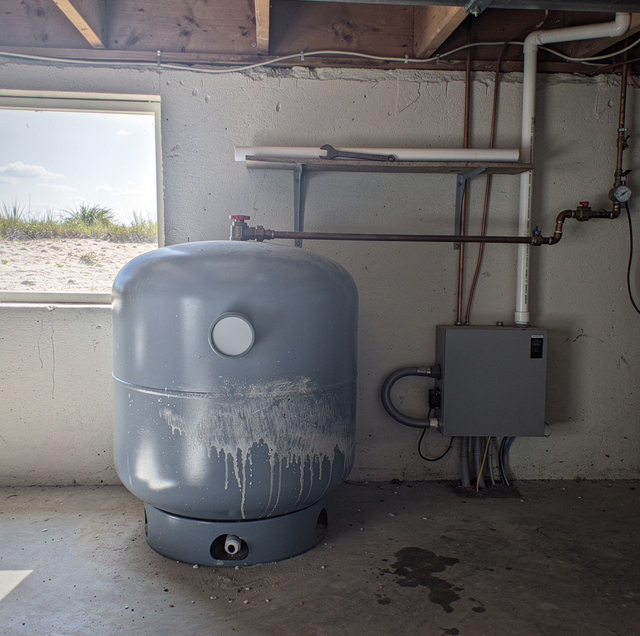
A well pump rarely dies without warning. Most homeowners remember the week before a total failure as a string of small, easy-to-explain annoyances: the shower ran a little weak, the toilet took an extra second to refill, the water looked a little cloudy after someone did laundry. None of it seemed urgent on its own. Then one morning the tap sputters, the pump cycles hard, and the water stops altogether.
That pattern isn't bad luck. A submersible or jet pump wears out gradually, just like a car engine, and each worn part leaves a specific fingerprint in the system's behavior before the motor finally quits. Reading those fingerprints early is the difference between a planned replacement and an emergency call on a Saturday night.
| What you notice | What's likely happening inside the system | What it usually means |
|---|---|---|
| Pressure drifts down over several weeks | Impeller vanes are eroding, so each stroke moves less water per revolution | Wear is progressing, not yet critical |
| The pump runs longer to refill the same tank | Reduced flow rate forces longer run cycles to reach cut-out pressure | Motor and bearings are working harder for the same result |
| Sputtering, spitting air, or a hissing faucet | Air is entering the system, often from a loosening foot valve or a pump losing prime | Could be a worn valve or a pump nearing its limit |
| Water looks cloudy, gritty, or faintly orange right after startup | Fine sediment or mineral scale is being disturbed inside a wearing pump housing | Internal wear or well-screen breakdown, not just a water-quality issue |
| The electric bill for well operation creeps up | A struggling motor draws more amperage to do the same job | Motor winding or bearing wear increasing resistance |
| Pump clicks, hums, or trips the breaker without moving water | Motor is trying to start against a mechanical bind or has lost the ability to build torque | Could be a stuck impeller, failing capacitor, or dying motor |
None of these symptoms alone proves a pump is finished. Together, or trending worse over consecutive months, they describe a machine nearing the end of its service life.
Why wear shows up as a slow fade, not a sudden stop
In a submersible pump, water is lifted by a stack of impellers that spin within close-tolerance housings. Every rotation, tiny amounts of sand, scale, and dissolved minerals pass through those tight clearances. Over years of operation, that abrasive flow erodes the impeller edges and the housing they spin inside, widening the gap between the moving and stationary parts. A wider gap lets water slip backward rather than be pushed upward, so the same motor speed moves less water per revolution.
That's why declining output rarely looks like a cliff. It looks like a ramp: pressure that used to hold steady now drifts a few pounds lower each month, and a pump that used to run for 40 seconds per cycle now runs for a minute. The motor hasn't failed, but it's fighting a losing mechanical battle it will eventually lose outright, usually when a worn bearing finally seizes or a weakened winding shorts under the extra heat.
The motor and capacitor side of aging
A well pump motor and its start capacitor absorb stress every single time the pump cycles on, not just during peak-use months. Repeated heating and cooling of the copper windings breaks down the insulating varnish coating each strand, and once that insulation thins enough, the windings can short internally, especially the moment the motor draws its highest current during startup. A start capacitor ages the same way: the dielectric film inside weakens with every start cycle, so a pump that used to snap on instantly begins to hesitate, hum, or trip the breaker before it catches.
Heat and constant humidity around the pressure switch and control box accelerate this timeline by corroding electrical contacts and softening wire insulation, while an occasional hard freeze can crack an exposed above-ground line or fitting on the same system. Both directions of temperature stress land on the same aging parts; a pump doesn't get a break from wear just because the season changes.
When sediment accelerates the end
In sandy aquifer formations, fine grit reaches the pump intake more easily than in rocky ground, and a well screen that's starting to degrade lets even more sand through. That sediment behaves like a slow-motion sandblaster on impellers, bearings, and seals. A homeowner who notices gritty water alongside declining pressure isn't dealing with two separate problems; the grit often accelerates the mechanical wear that's already showing up as weaker flow. A technician checking a pump this age usually inspects the well screen and sand content specifically, because clearing sediment at the source can buy back real service life for a pump that still has some mechanical health left.
A run-time test you can do at home
Time how long the pump runs from the moment a faucet is turned on until the pressure recovers and the pump shuts off, using the same faucet and flow rate each time. Write the number down and repeat it monthly. A pump in good condition maintains a fairly steady runtime; a pump losing capacity shows run times that climb month over month even though household water use hasn't changed. This single number, tracked over a season, tells you more about a pump's trajectory than any single day's water pressure does, because it filters out normal day-to-day variation in usage.
What a technician checks before calling it dead
A proper diagnostic on an aging pump goes beyond listening for noise. A technician typically tests amp draw against the motor's rated nameplate figure (a motor pulling noticeably more amps than its rating is fighting internal resistance), runs an insulation resistance test on the winding to check for developing shorts, and measures actual flow rate at the wellhead against the pump's original output rating. Comparing those three numbers against a pump's baseline separates a component that can be repaired, like a bad capacitor or a failing pressure switch, from a motor and impeller stack that has actually reached the end of its service life.
Frequently Asked Questions
Most submersible pumps run somewhere between 8 and 15 years depending on water quality, sand content, and how often the system cycles; a pump serving a high-demand household or drawing from a sandy, sediment-heavy well tends to land on the shorter end of that range, while a low-sediment well with light daily demand can push a pump well past 15 years.
Yes. A motor that's struggling to build pressure often causes the pressure switch to cycle more frequently than it's rated for, and that extra cycling wears the switch's electrical contacts faster than normal use would; it can also fatigue the rubber bladder inside a pressure tank, since the tank absorbs more frequent pressure swings than the system was designed around.
There are two distinct sound patterns worth knowing. A grinding or growling noise usually points to worn bearings inside the motor or pump housing, while a high-pitched whine or a hum that doesn't resolve into a normal start more often points to a weak start capacitor struggling to get the motor moving.
A run time increase of roughly 10 to 20 percent during peak irrigation or houseguest season is typical and isn't a red flag by itself. The more reliable comparison isn't last month; it's the same month a year earlier: a pump that ran about 45 seconds per cycle last July and needs a full minute this July, even though household demand hasn't grown, is showing wear that seasonal load alone doesn't explain. A pump that's simply working through normal seasonal demand returns to its prior baseline once that demand drops back off.
A technician differentiates the two with a drawdown test: measuring the static water level (the water's resting depth when the pump is off) against the pumping level (the depth while the pump is running). If the gap between those two numbers has grown significantly compared to the well's original completion report, the aquifer's yield has likely dropped; if that gap is unchanged but surface flow remains weak, the pump itself is the more likely culprit.
Proactive replacement, timed around a pump showing several of the wear signs above, often avoids the collateral damage a full failure can cause, such as a motor seizing mid-cycle and burning through control wiring, or a dry-running pump overheating badly enough to warp its own housing. Replacing on your own schedule, rather than the pump's, also gives more control over matching pump capacity to current household demand, rather than reacting to an emergency.
A pump nearing the end of its service life communicates this through pressure, runtime, sound, and water clarity well before it stops working entirely. Reading those signals early and tracking them instead of dismissing each one individually turns a potential middle-of-the-night outage into a repair scheduled on your own terms.
Get a full pump diagnostic before a slow fade turns into a dead well - a technician can test amp draw, insulation resistance, and flow at the wellhead in one visit. Pump Repair Services serves Apopka and the surrounding Central Florida area. Call (407) 625-5499.
